
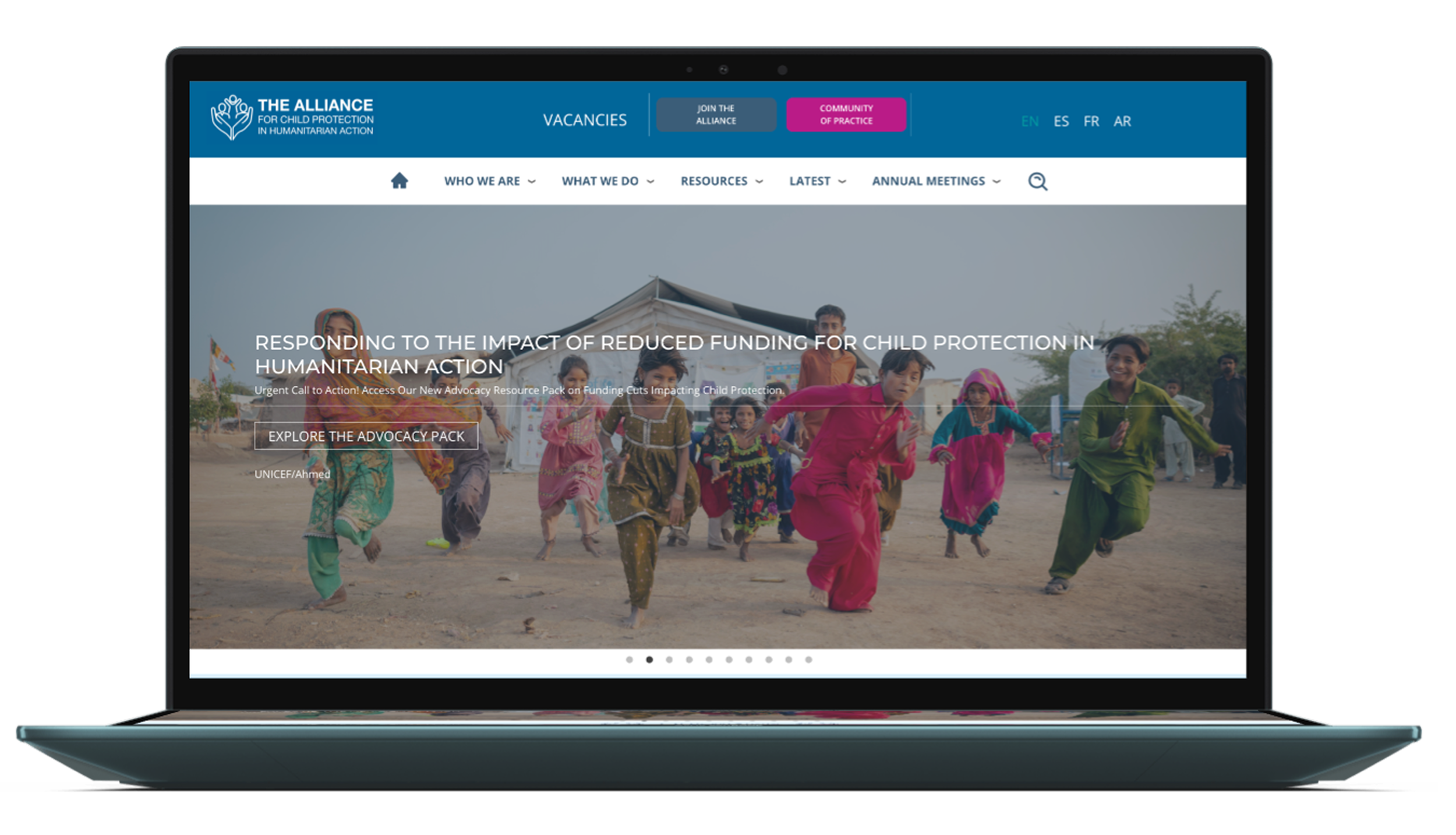
The Alliance for Child Protection in Humanitarian Action
United Nations Affiliate
The Alliance for Child Protection in Humanitarian Action, a United Nations-affiliated organization, supports thousands of global practitioners working on child protection-related issues. Its website serves as the primary hub for standards, training, and collaboration, but usability and engagement were declining.
As the UX Designer, I led the multi-lingual redesign, improving usability, accessibility, and information architecture while translating research into actionable design solutions. I developed wireframes, prototypes, and design guidelines to ensure the platform delivered critical guidance efficiently to a culturally diverse, multi-lingual global user base. This project applied user-centered design and strategic storytelling to meet the needs of high-impact users across diverse regions.
OVERVIEW
ROLE
UX Designer & Researcher
Visual Design
Prototyping & Usability Testing
Accessibility & Internationalization
Stakeholder Workshops & Pitching
Developer Handoff & Iteration
UX Strategy
Product Thinking
User Research
Information Architecture
Interaction Design
TOOLS
Figma, Miro, Qualitrics, Adobe Creative Suite, Microsoft 365
Discovery & Research
To kick off the project, I developed and distributed a survey completed by 174 humanitarian workers and conducted in-depth interviews with 15 practitioners to identify usability challenges and key workflow pain points.
Who is using the Alliance?
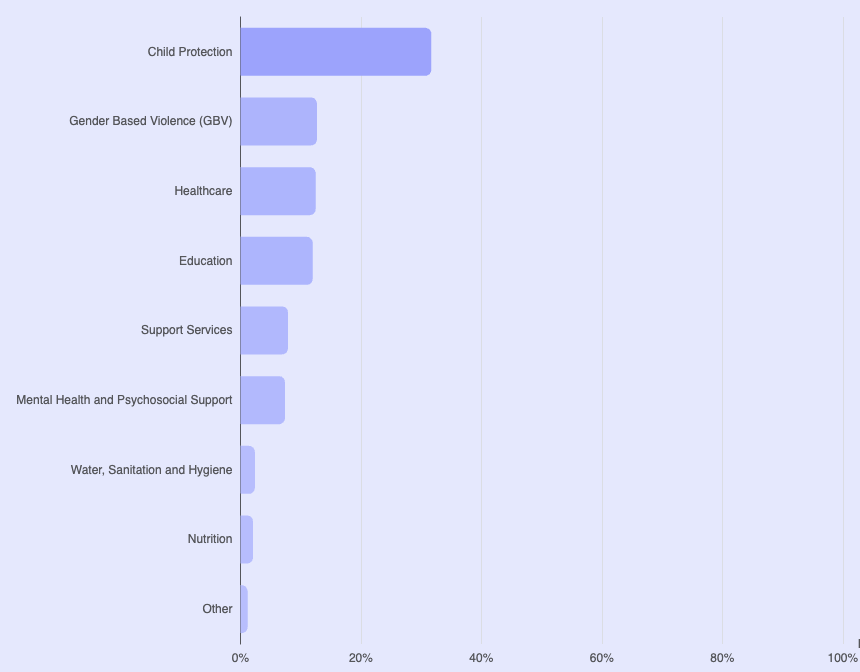
This data shows that the Alliance platform is used across a wide range of humanitarian sectors. The most frequent users are in child protection, but also have humanitarian workers from healthcare, gender-based violence, nutrition, and other sectors as well.
Why do humanitarian workers use the Alliance website?
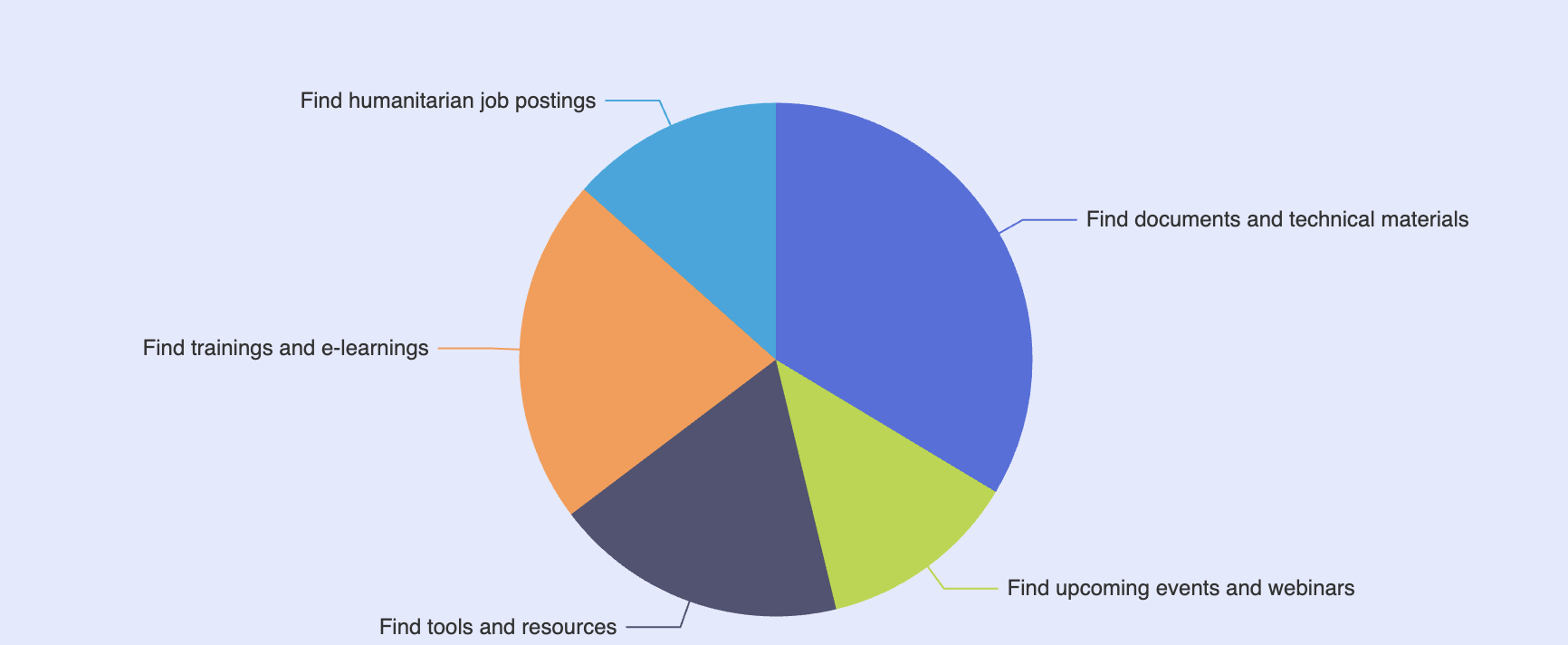
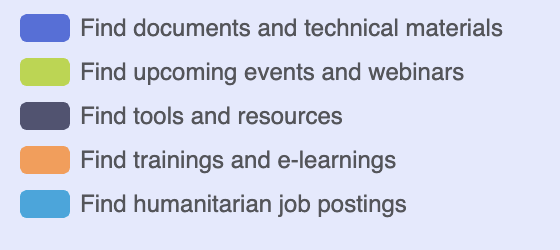
Understanding their goals and priorities allowed me to design the platform around real user needs, ensuring that critical guidance, resources, and tools were easy to find and use.
UX Insights from User Sector Analysis
Ensure key resources for Child Protection, Gender-Based Violence, and Healthcare are easily accessible.
Consider the needs of smaller sectors to ensure inclusivity
Plan workflows and content hierarchy based on real usage patterns.
Use findings to guide design decisions for discoverability and efficiency.
What type of internet connection do humanitarian workers have when accessing the Alliance website?
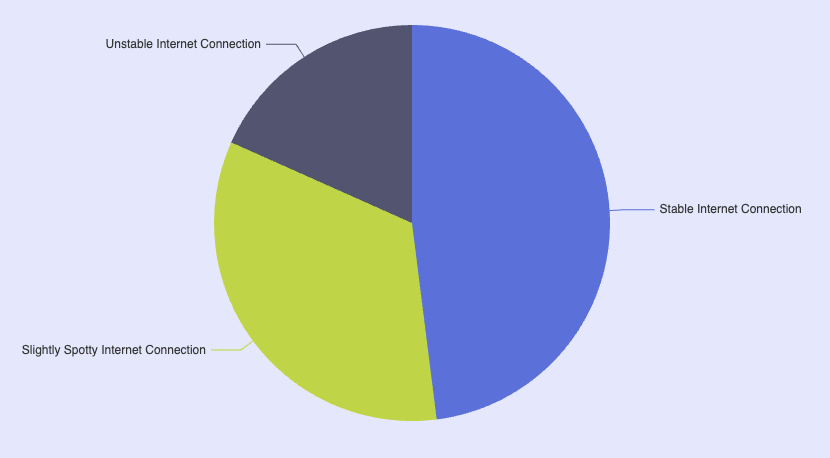
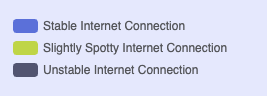
Knowing their connectivity constraints helped me optimize performance and accessibility, making the website functional even in low-bandwidth or unstable network environments.
User Pain Points:
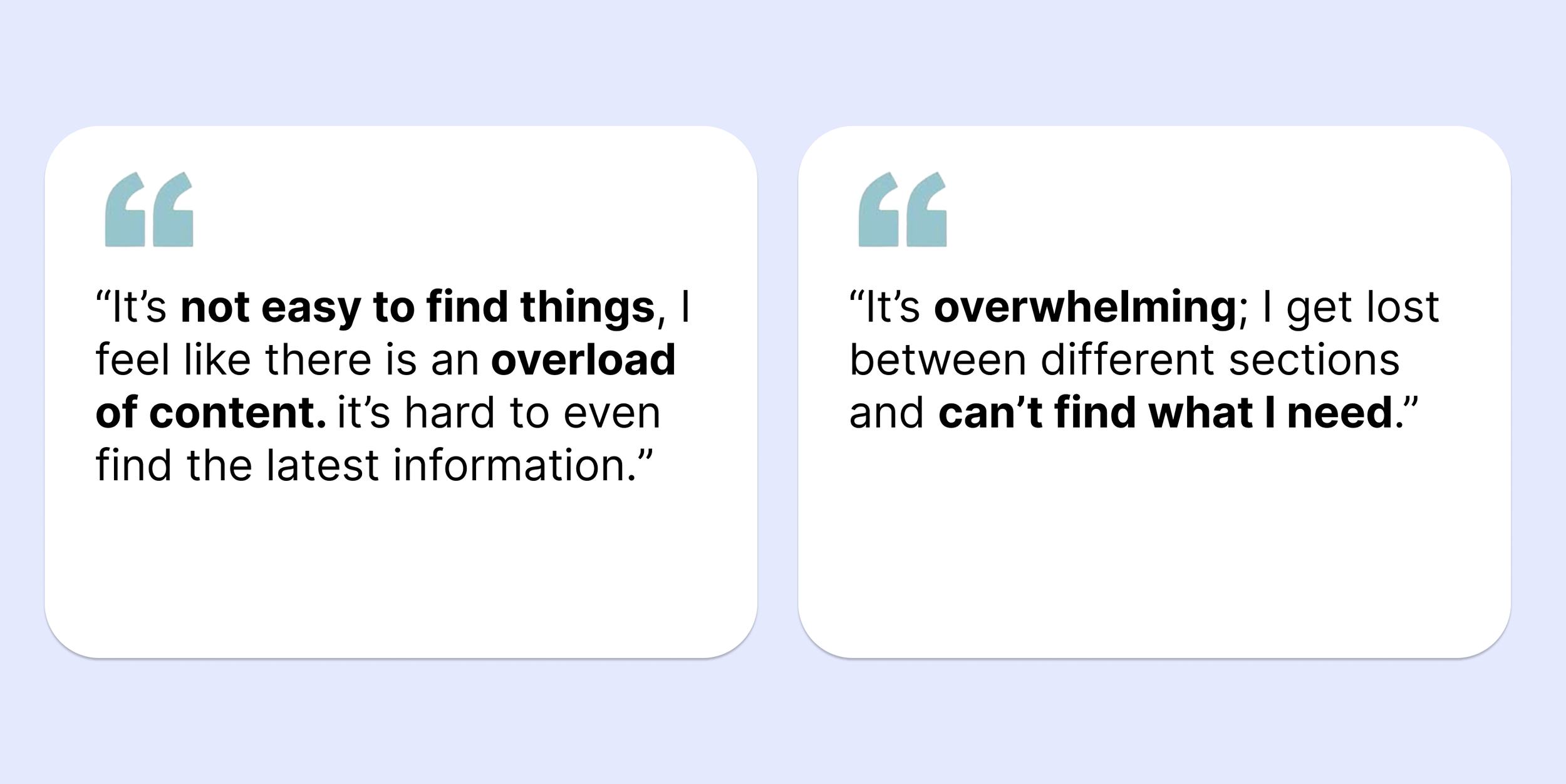
Information overload
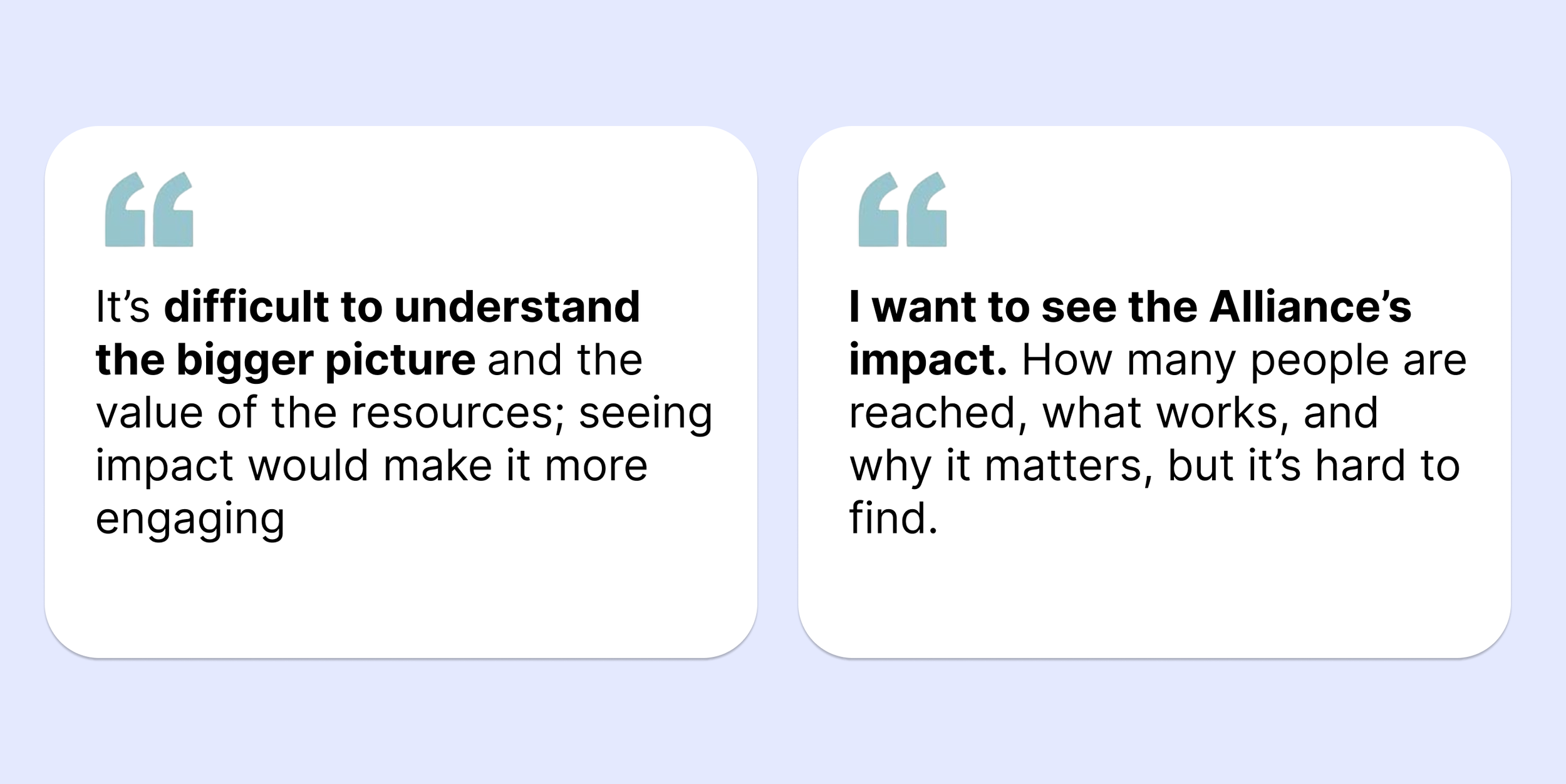
Impact Visibility
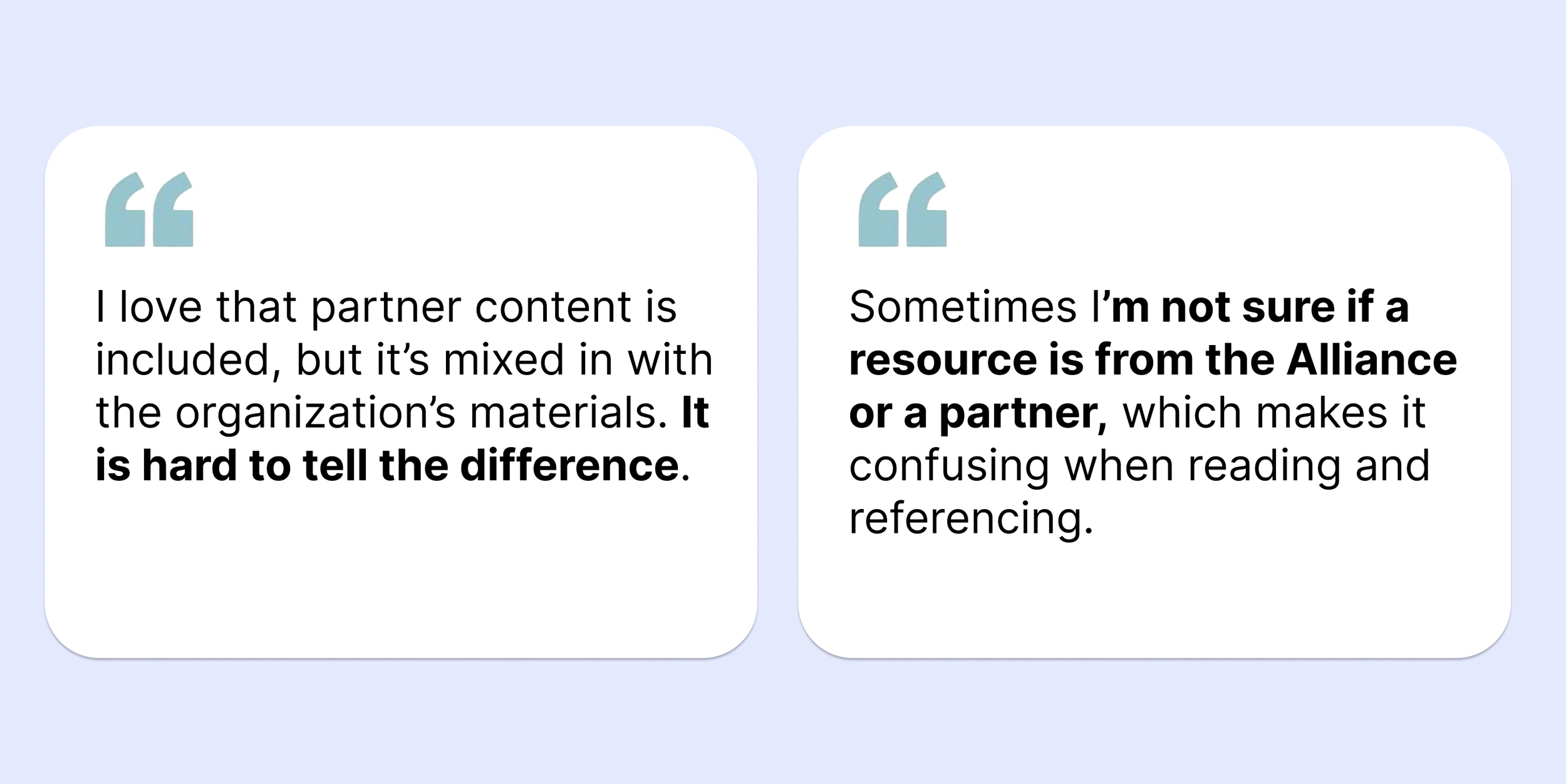
Alliance and partner material is not clearly distinguished.
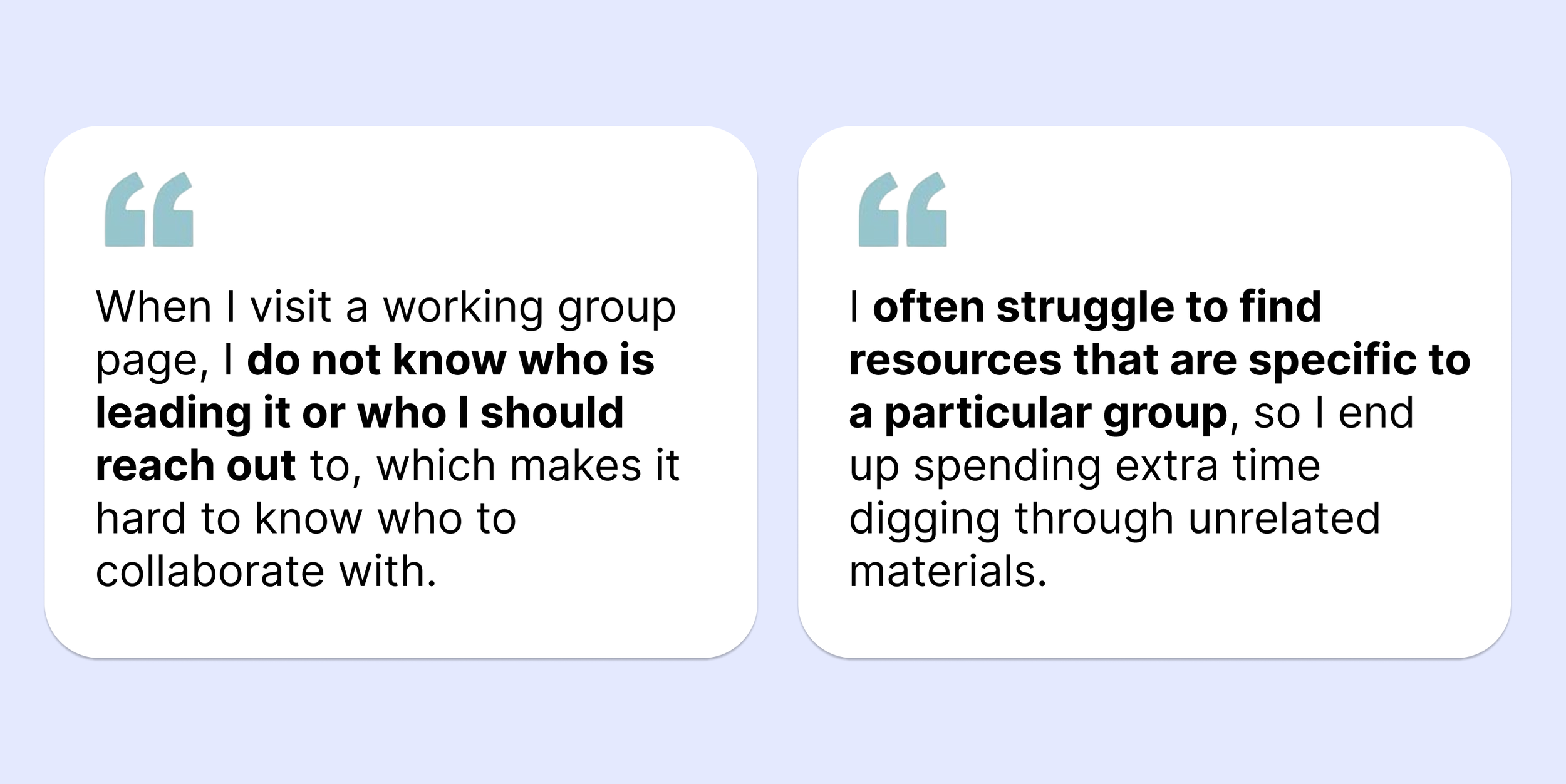
Unclear Working Group Information
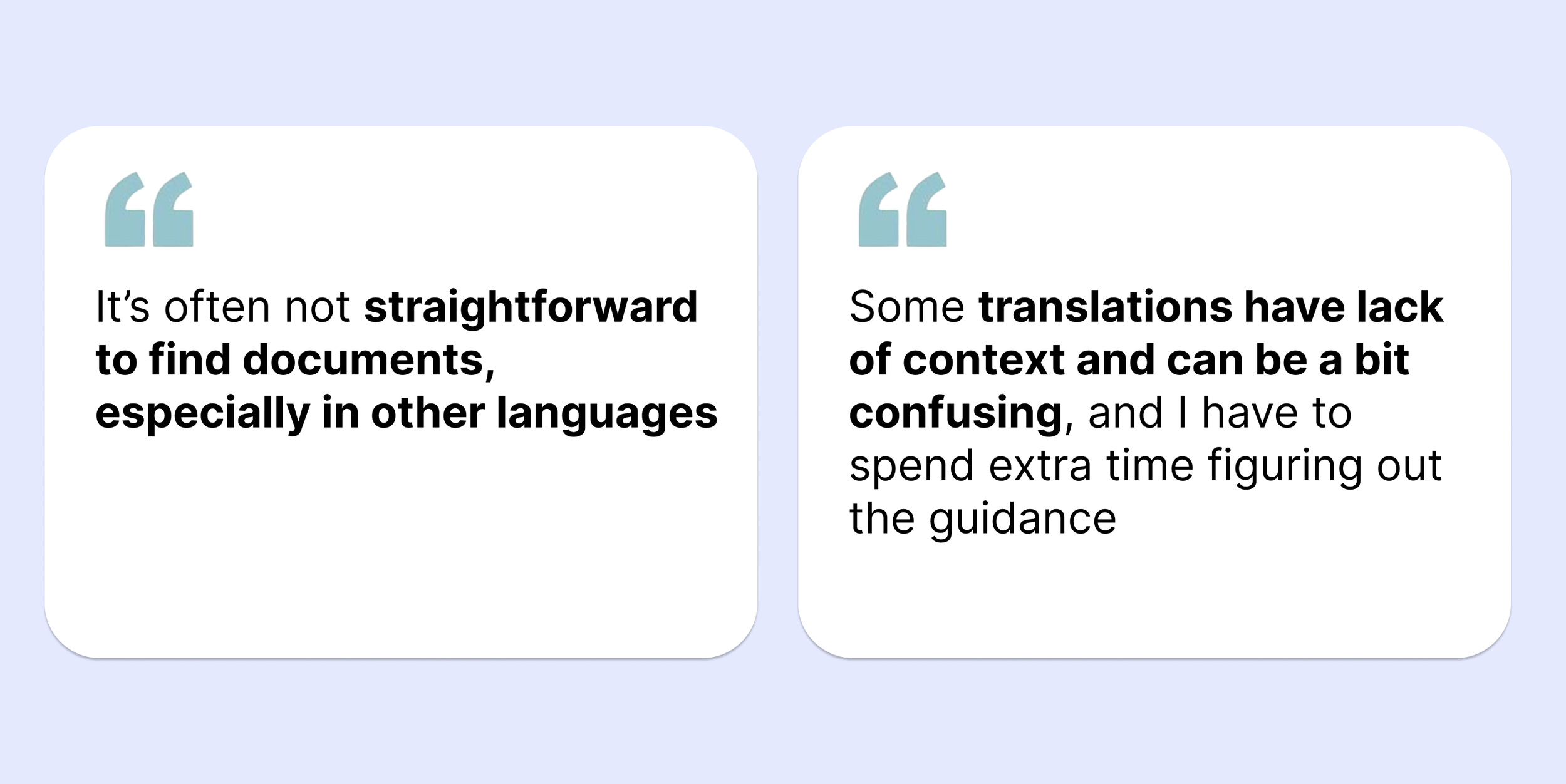
Language Accessibility
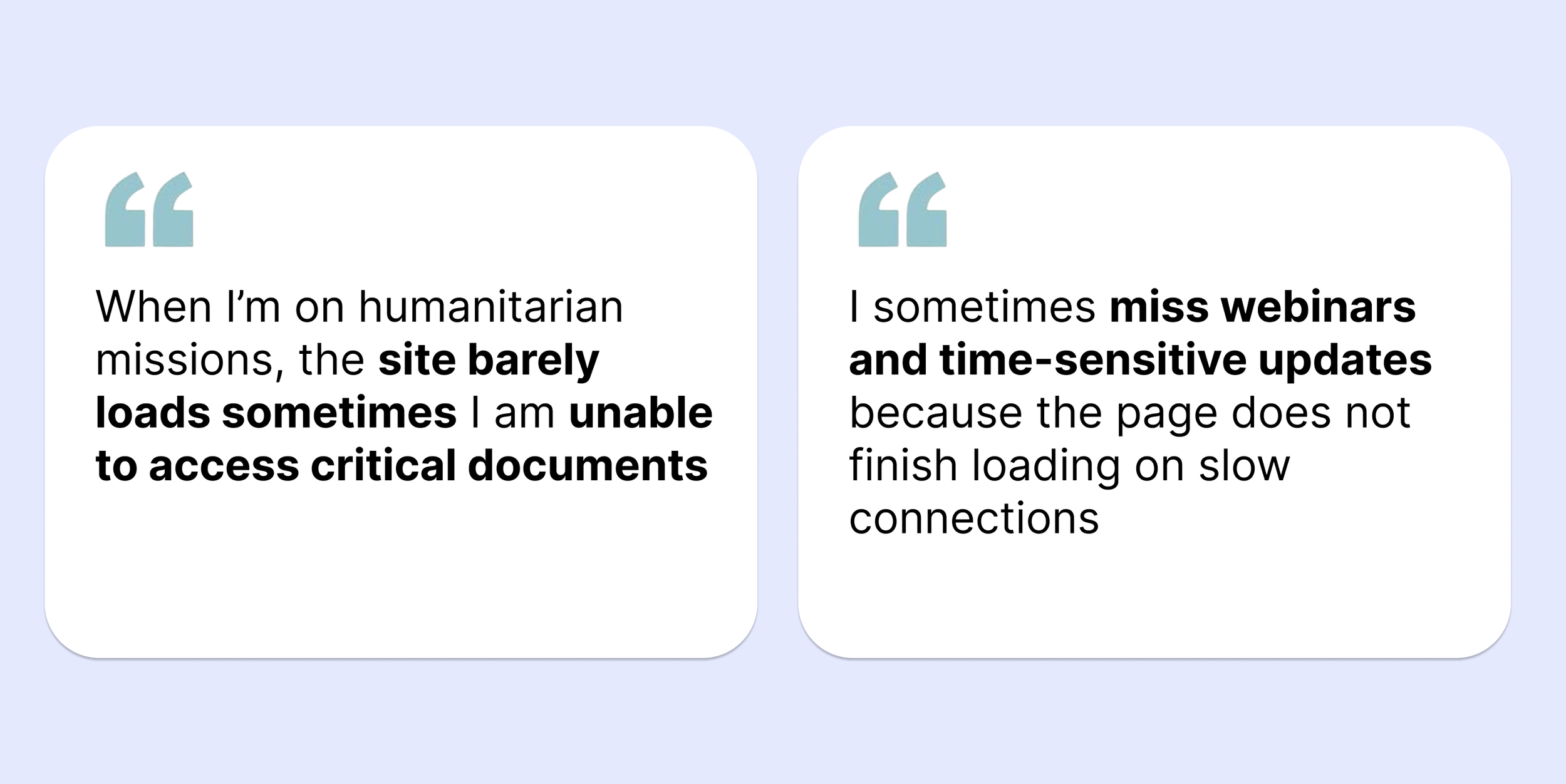
Low Bandwidth
The Challenge
The organization aimed to enhance its global humanitarian resource platform, serving users across multiple languages, internet speeds, and technical backgrounds.
Redesign Objectives
Simplify navigation and reduce information overload.
Improve search functionality to make content easier to find.
Enhance accessibility by designing the website in English, French, Spanish, and Arabic.
Clearly distinguish between the organization’s materials and partner content.
Ensure the platform works effectively in low-bandwidth environments.
Increase engagement and usability for a diverse global audience.
Design Process
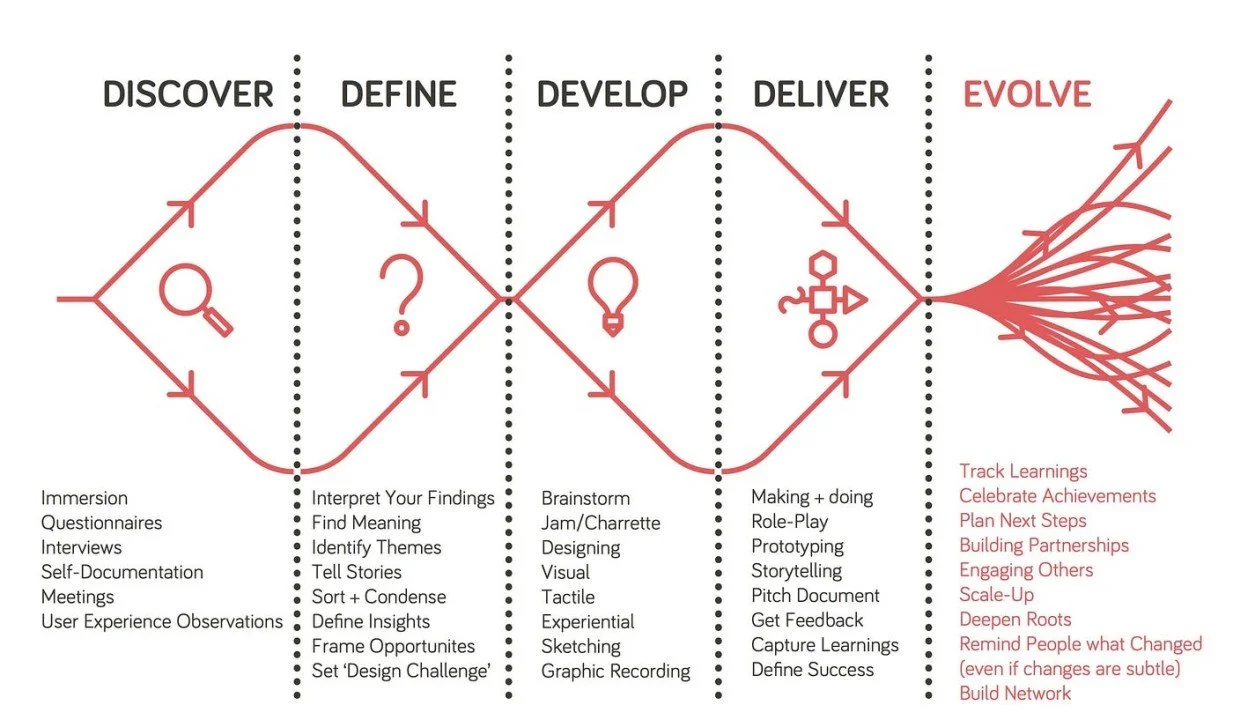
I used the double diamond design process and incorporated the key phases of Discovering, Defining, Developing, Delivering, and, of course, Evolving
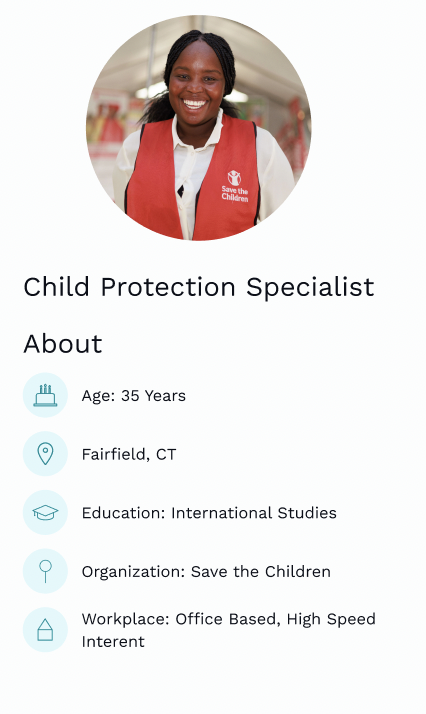
Image Credit: Double Diamond by Design CouncilUser Personas
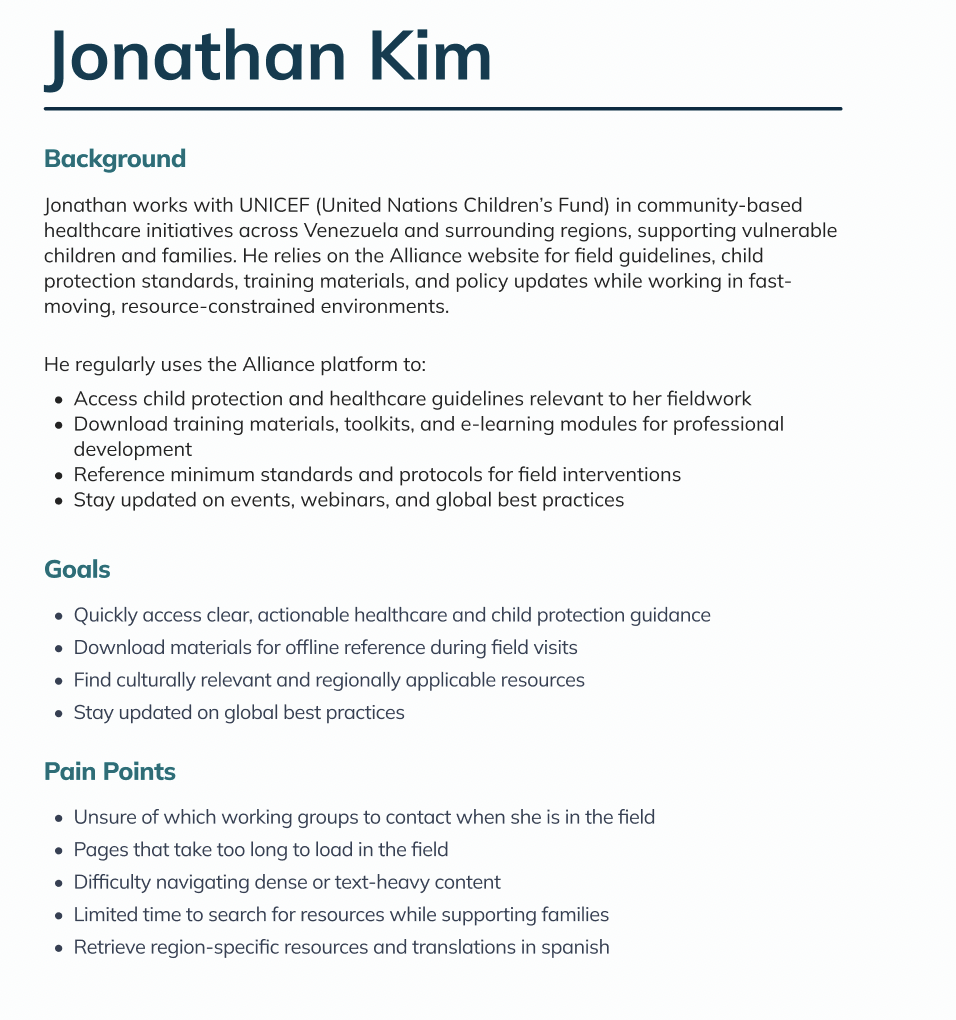
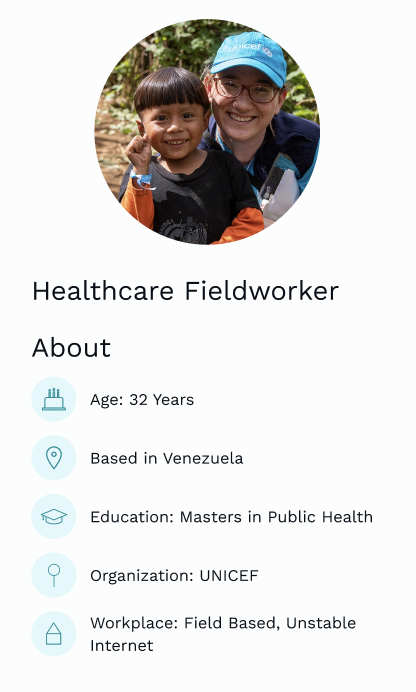
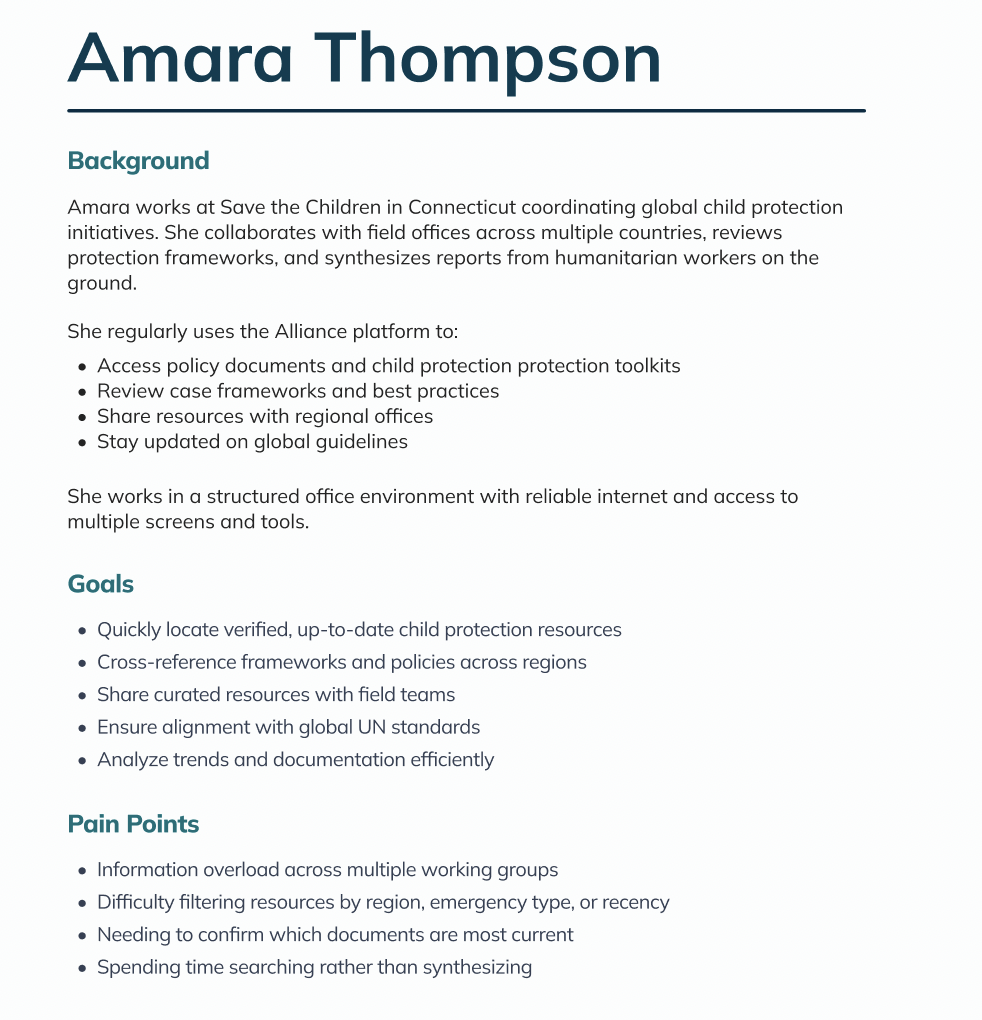
Low-Fi Wireframes
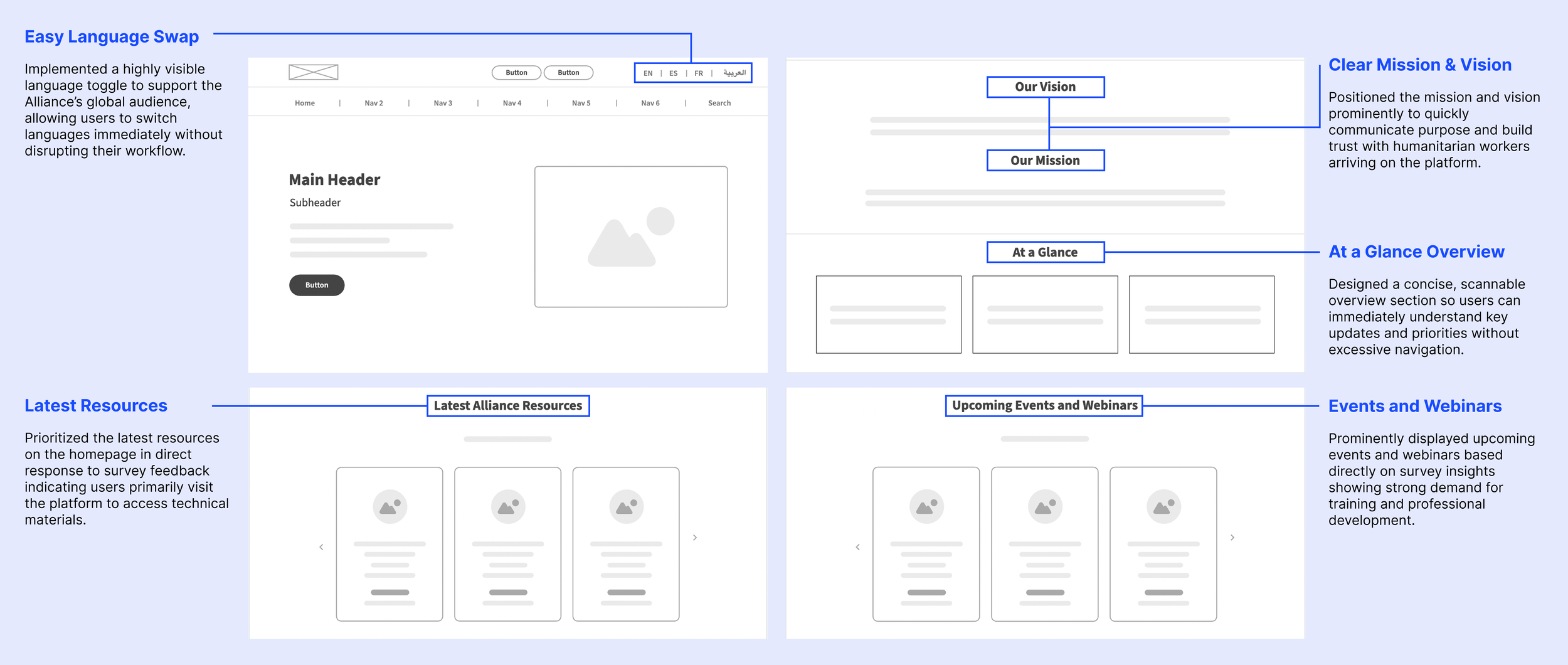
I created low-fidelity wireframes to test layout, navigation, and content hierarchy before visual design. Sharing them with stakeholders and humanitarian workers helped validate assumptions, refine workflows, and ensure alignment early in the process.
Released Product
Homepage
Prioritized essential resources based on user insights to improve discoverability.
Simplified homepage structure to reduce cognitive load for diverse audiences.
Highlighted key updates and events upfront, so users can access timely information immediately.
Improved language visibility and labeling, making it easier to find content in different languages.
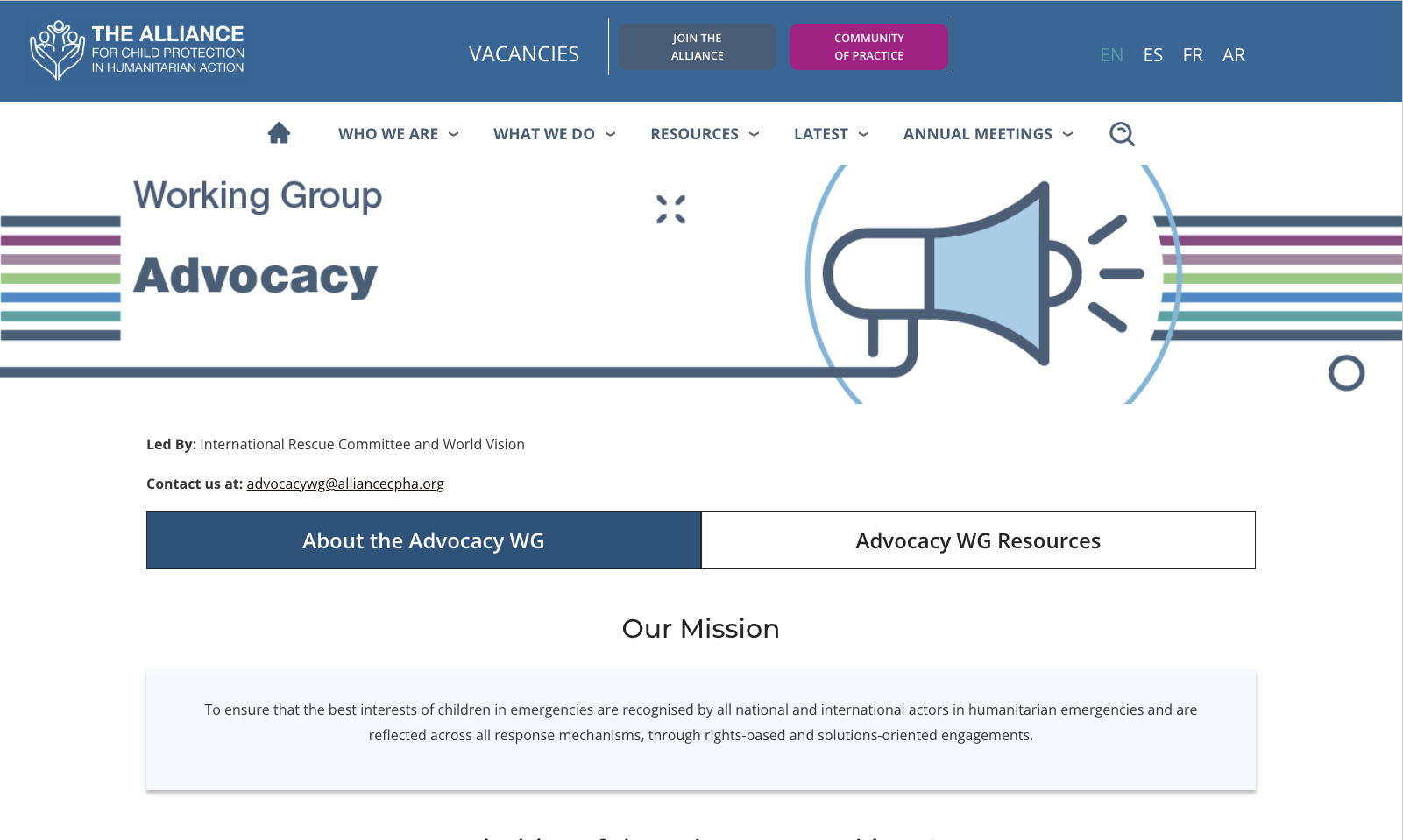
Working Group Pages
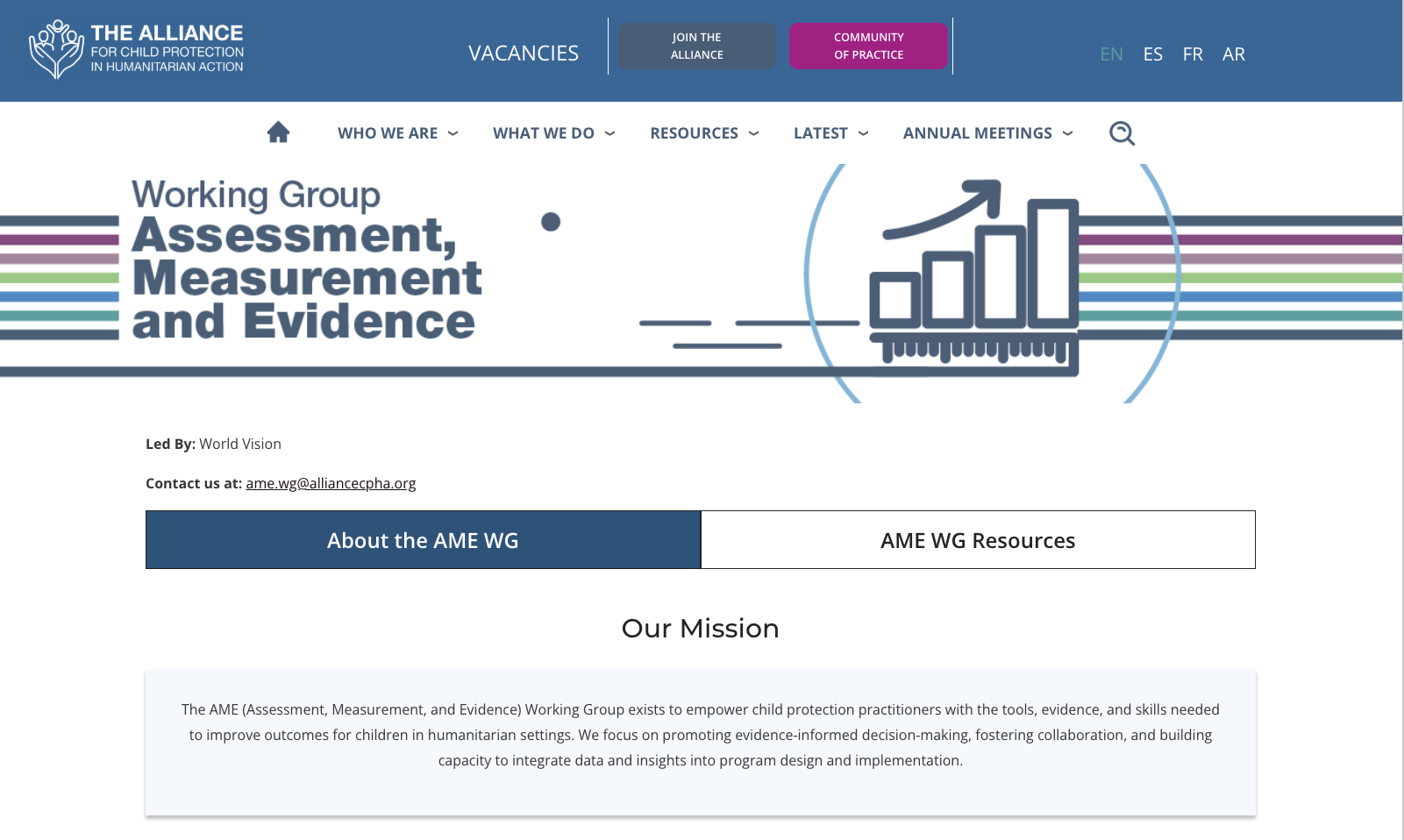
Showcased each group’s mission, leadership, and contact info with clear ‘About’ and ‘Resources’ tabs
Structured layout to make it easy for humanitarian workers to understand purpose and access group-specific materials quickly.
The redesign transformed the Alliance website from a static repository into a usable, accessible global knowledge platform for humanitarian practitioners. By improving navigation, search, content clarity, and accessibility, the website better supports practitioners in high-stress, time-sensitive environments and ensures equitable access for users in low-bandwidth regions and non-English speaking countries.
Success Metrics
35% faster discovery of humanitarian standards, tools, and training resources.
Achieved by restructuring the information architecture and simplifying navigation labels based on usability testing insights.
Measured through moderated task-based testing, comparing average completion times before and after prototype iteration.
20% increase in overall user engagement.
Driven by improving content hierarchy, clarifying resource categorization, and surfacing high-demand materials (CPHA standards, tools, trainings) on primary navigation paths.
Measured using Google Analytics indicators such as session duration, pages per session, and resource interaction rates.
40% improvement in website load time in low-bandwidth regions
Optimized page weight, limited heavy media, set file size standards, and recommended streamlined JavaScript. Videos were linked externally to reduce server load.
Redesign Impact
Guiding UX for a United Nations affiliated global organization deepened my perspective on leadership, empathy, and design impact.
Accessibility is infrastructure, not a feature.
Simplicity is strategic; reducing cognitive load improves real-world effectiveness.
Research establishes authority and aligns stakeholders.
Designing for global impact requires empathy for context: language, connectivity, urgency, and real-world constraints.